


- Health Tips
- June 10, 2026
Introduction
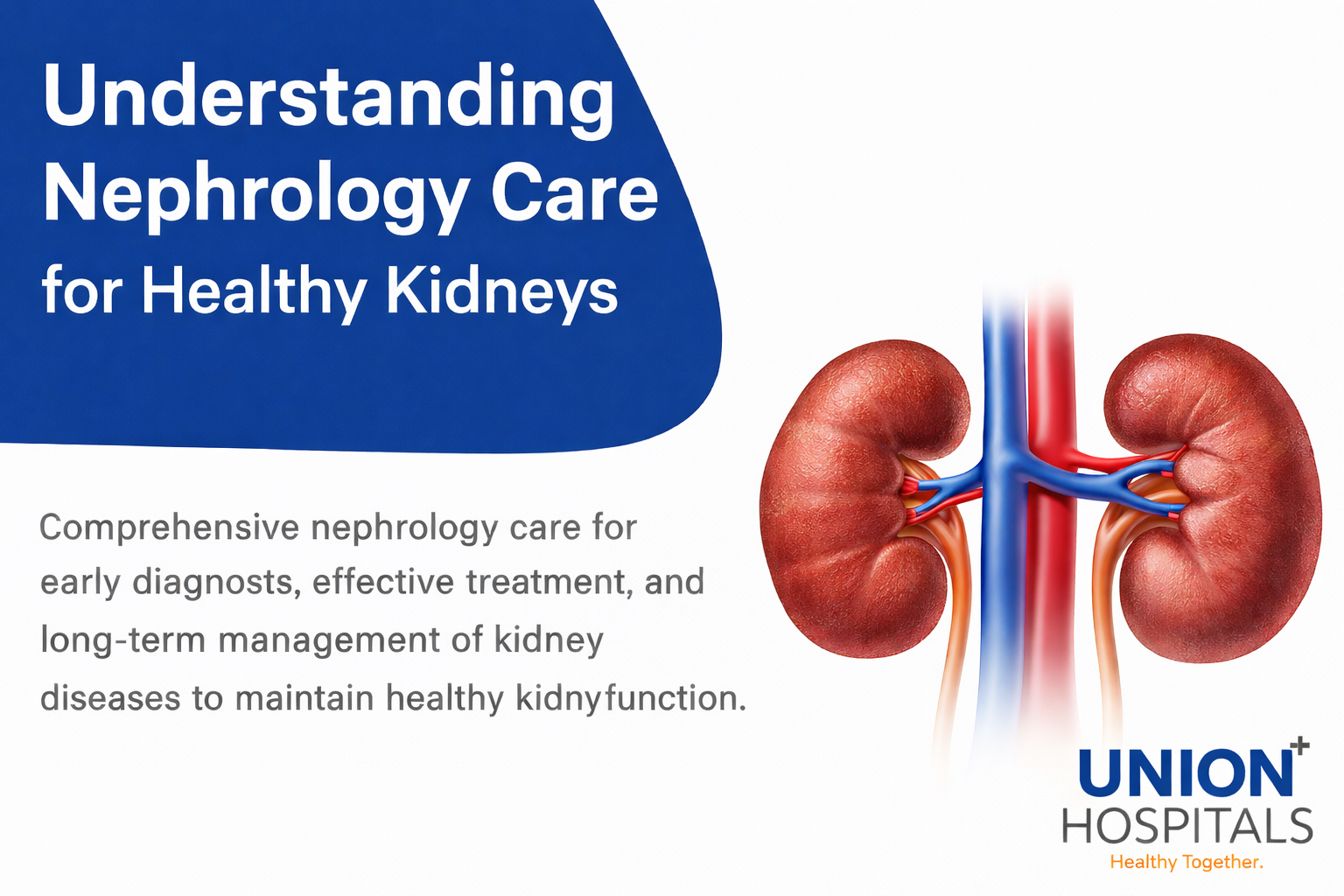
Your kidneys work tirelessly every single day — silently, invisibly, and without ever asking for anything in return. These two fist-sized organs sitting just below your ribcage filter approximately 200 litres of blood every 24 hours, removing waste, balancing minerals, regulating blood pressure, producing red blood cells, and maintaining the precise fluid balance that keeps every other organ in your body functioning correctly. Without healthy kidneys, survival is not possible.
And yet kidney disease is one of the most under-recognised health threats in India today. According to the Indian Council of Medical Research, an estimated 17% of the Indian population suffers from some form of chronic kidney disease — and the vast majority of them have no idea. Kidney disease is called a "silent disease" for a very specific reason: it causes no pain, no obvious symptoms, and no warning signals until function has already declined by 50% or more. By the time most patients are diagnosed, significant and irreversible damage has already occurred.
This is precisely why choosing the right nephrology centre for diagnosis, monitoring, and treatment is one of the most important healthcare decisions any patient — or any patient's family — can make. At Union Hospitals Vijayawada, home to the Best Nephrology Hospitals Vijayawada and the most trusted Best Kidney Specialist Hospital in Vijayawada, patients across Andhra Pradesh and Telangana now have access to comprehensive, expert, and compassionate kidney care — from early-stage detection through advanced dialysis and long-term management — all under one roof in Governorpet, Vijayawada.
This guide is your complete resource for understanding nephrology care: what your kidneys do, what threatens them, what conditions our nephrologists treat, how diagnosis and treatment work, and why Union Hospitals is the right choice for your kidney health.
What Is Nephrology? Understanding the Specialty
Nephrology is the branch of internal medicine dedicated to the study, diagnosis, and treatment of diseases affecting the kidneys and the urinary system. A nephrologist — a kidney specialist — is a physician who has completed MD training in internal medicine followed by a DM super-speciality fellowship specifically in nephrology. This makes nephrologists among the most extensively trained specialists in medicine.
Nephrologists manage conditions that range from common and manageable — like urinary tract infections and kidney stones — to complex and life-threatening — like acute kidney injury requiring emergency dialysis, advanced chronic kidney disease, and glomerulonephritis. They also co-ordinate with transplant surgeons for patients who reach end-stage renal failure and require kidney transplantation.
What makes nephrology particularly critical in the Indian context is the relationship between kidney disease and two of the country's most prevalent health conditions: diabetes and hypertension. Together, diabetic nephropathy and hypertensive kidney disease account for more than 60% of all cases of chronic kidney disease in India. Every person with diabetes or high blood pressure is simultaneously a person at significant risk for kidney disease — and the majority are not being monitored for it.
At the Best Kidney Specialist Hospital in Vijayawada, Union Hospitals' nephrology department provides the full spectrum of kidney care that patients in this region need and deserve.
What Do Your Kidneys Actually Do? The Full Picture
Understanding why kidney disease is so serious requires understanding just how much your kidneys actually do. Most people know kidneys filter waste — but that is only a fraction of their function.
Waste Filtration and Excretion
The kidneys filter blood through approximately one million microscopic filtering units called nephrons — removing metabolic waste products including urea, creatinine, uric acid, and excess salts. These are concentrated into urine and excreted. When the kidneys fail, these toxins accumulate in the blood — causing the condition called uraemia, which is progressively and fatally toxic to the brain, heart, and other organs.
Fluid Balance Regulation
The kidneys regulate how much fluid the body retains — adjusting urine output in response to hydration status, blood pressure, and hormonal signals. Impaired fluid regulation causes oedema (swelling in the legs, face, and lungs), dangerous blood pressure swings, and pulmonary oedema — fluid accumulation in the lungs that can be life-threatening.
Blood Pressure Control
The kidneys produce renin — a key enzyme in the renin-angiotensin-aldosterone system that controls blood pressure. When kidneys are damaged, blood pressure regulation is disrupted, often causing severe hypertension that then further accelerates kidney damage in a destructive cycle.
Red Blood Cell Production
The kidneys produce erythropoietin (EPO) — the hormone that signals the bone marrow to produce red blood cells. Kidney failure significantly reduces EPO production, causing renal anaemia — chronic fatigue, breathlessness, and weakness that profoundly affect quality of life.
Bone Health and Calcium Regulation
The kidneys activate vitamin D — essential for calcium absorption and bone mineralisation. Kidney disease disrupts this process, leading to renal bone disease, fractures, and secondary hyperparathyroidism over time.
Acid-Base Balance
The kidneys maintain the blood's pH within the narrow range required for normal cellular function — excreting excess acid and retaining bicarbonate as needed. Kidney failure causes metabolic acidosis — a dangerous imbalance that accelerates muscle breakdown and worsens heart and bone disease.
This extraordinary multi-system role is why kidney failure affects virtually every organ in the body — and why preventing kidney disease or catching it early is so much more effective than treating end-stage renal failure.
Why Union Hospitals Is the Best Nephrology Hospital Vijayawada
Comprehensive, Full-Spectrum Kidney Care
From early-stage CKD monitoring to emergency dialysis — Union Hospitals provides complete nephrology services under one roof. Patients do not need to travel to multiple facilities or navigate fragmented care pathways. Everything they need, from diagnosis to long-term management, is available at one trusted centre.
Expert Kidney Specialists
Union Hospitals' nephrology department is staffed by DM-qualified kidney specialists with deep expertise in the full range of kidney conditions — including complex glomerular diseases, refractory hypertension, diabetic nephropathy, and dialysis management. Our nephrologists are supported by a team of trained nephrology nurses, dietitians, and dialysis technicians.
Modern, Well-Equipped Dialysis Unit
Our dialysis unit operates to the highest standards of safety, cleanliness, and efficiency — with modern haemodialysis machines, individual patient stations, strict infection control protocols, and dedicated trained nursing staff. Both haemodialysis and peritoneal dialysis programmes are available.
24/7 Renal Emergency Response
Kidney emergencies — AKI, severe hyperkalaemia, pulmonary oedema from fluid overload, and uraemic crises — require immediate, expert management. Union Hospitals provides round-the-clock nephrology emergency cover, ensuring that patients facing renal emergencies receive life-saving intervention at any hour.
Multidisciplinary Integration
Kidney disease rarely exists in isolation. It is interwoven with diabetes, hypertension, cardiovascular disease, and — in more complex cases — autoimmune disease and malignancy. Union Hospitals' multidisciplinary structure means our nephrology team works in direct collaboration with general medicine, cardiology, endocrinology, critical care, and urology — ensuring every patient's care is genuinely co-ordinated.
Patient Education and Empowerment
At Union Hospitals, patients are partners in their own care. Our team takes the time to explain the condition, the treatment rationale, dietary requirements, and the importance of monitoring — empowering patients and their families to actively participate in protecting kidney health. Informed patients achieve better outcomes.
Accessible Location Serving All of Vijayawada and Beyond
Conclusion
Your kidneys do not announce their distress until the damage is severe. They do not hurt when they are struggling. They do not stop working suddenly — they decline quietly, progressively, and often invisibly. This is what makes nephrology care so critically important: the window for intervention that truly changes outcomes is long before symptoms ever appear.
Union Hospitals Vijayawada — the Best Nephrology Hospitals Vijayawada and the Best Kidney Specialist Hospital in Vijayawada — is here to help you use that window. Whether you are a diabetic patient who has never had your kidneys checked, a hypertensive patient whose blood pressure has been difficult to control, or someone who has already been told they have kidney disease and needs specialist guidance, our nephrology team is ready to provide the expert, personalised, compassionate care that your kidneys deserve.
Do not wait for symptoms. Do not wait for the next check-up. Do not wait for a crisis that could have been prevented.